Nobody teaches you how to buy jeans. You’re just supposed to walk into a store, try on forty pairs, and leave upset.
It doesn’t have to go like that.
With a tape measure and about ten minutes, you can learn exactly how to find jeans that fit, your rise, your stretch, your cut. Here’s the whole system.
1. Measure Yourself First (It Takes 5 Minutes)
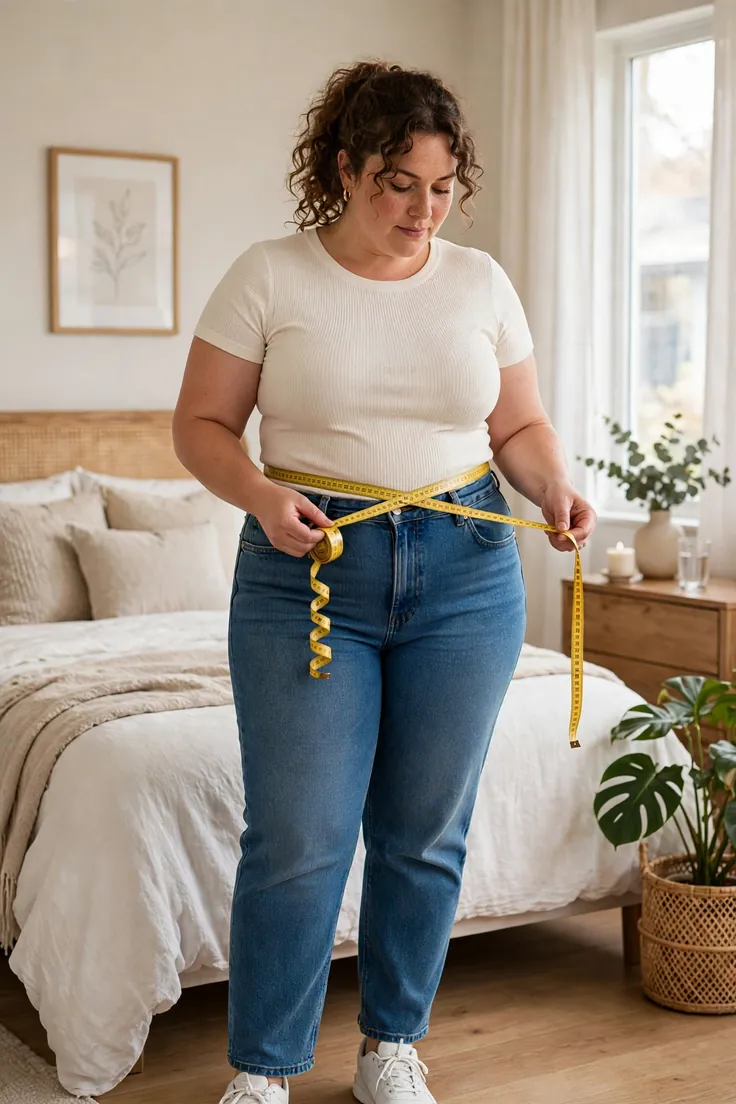
Before you shop, grab a tape measure. You need three numbers: your natural waist (the narrowest point), your hips (the fullest point), and your inseam (crotch to ankle bone). Write them down, most size charts are built on these three.
Fit tip: Measure over thin clothing, not bulky layers, an inch of error changes the size.
Why it matters: Vanity sizing means a “size 18” varies by 3+ inches between brands. Your measurements don’t lie.
2. Learn Your Rise
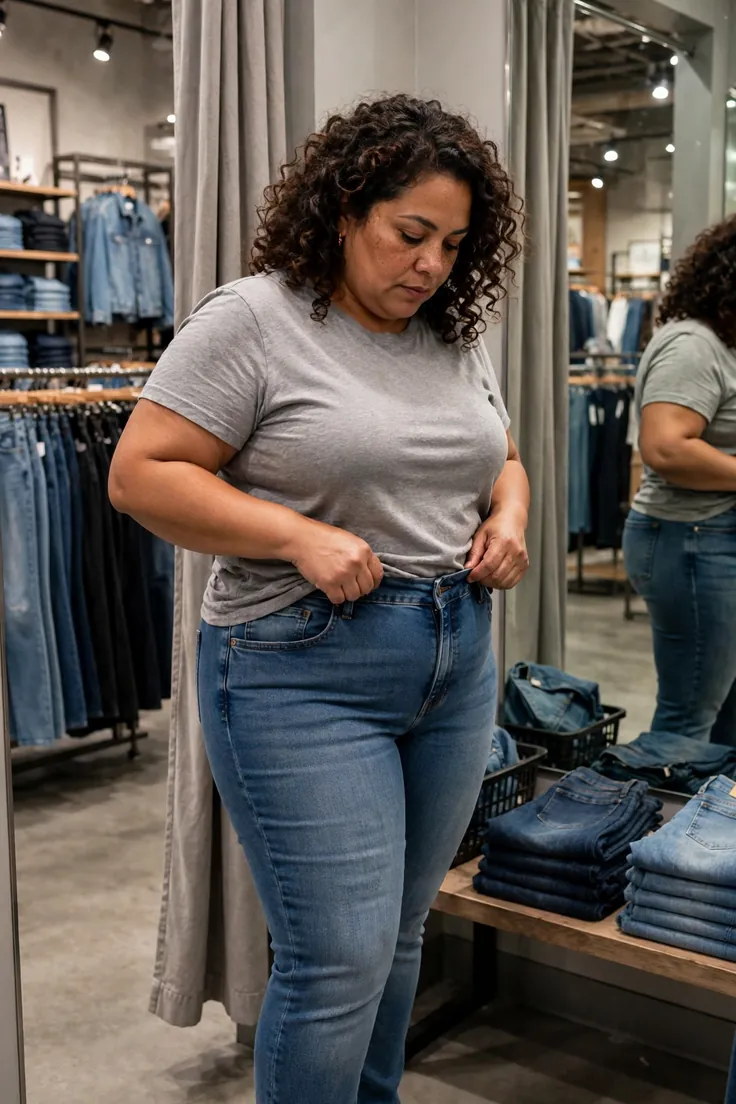
Rise is the distance from crotch to waistband, and it’s the #1 reason jeans don’t fit. Low rise slides down; mid rise hits at the hip; high rise sits at the natural waist. For most plus size bodies, high rise (10+ inches) is the winner.
Fit tip: If your jeans gap at the back waist, you likely need a higher rise, not a bigger size.
Why it matters: The wrong rise creates every classic complaint, muffin top, plumber’s crack, constant hiking.
3. Decode the Stretch Percentage
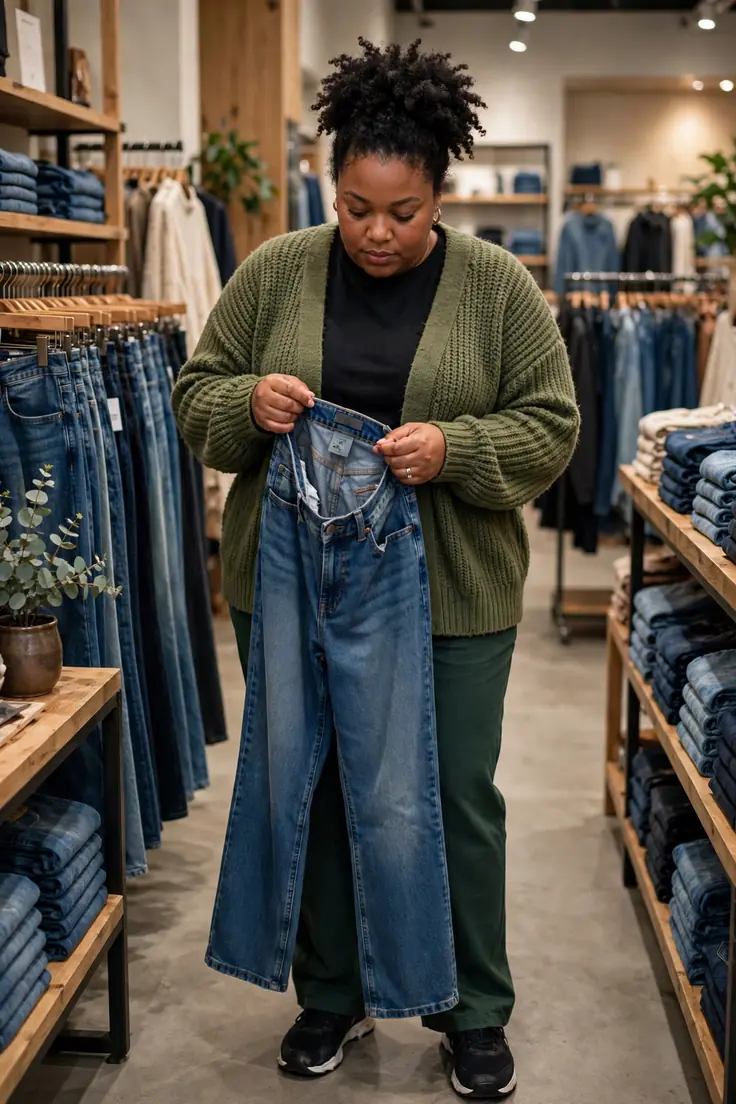
Check the fabric label. 1-2% elastane = light stretch (holds shape); 3-5% = comfort stretch (forgiving); 100% cotton = rigid (no give, true vintage fit). For daily wear, 2-3% is the sweet spot.
Fit tip: More stretch isn’t always better, over 5% elastane and jeans bag out by evening.
Why it matters: Stretch changes how a size fits. A rigid 18 fits nothing like a stretchy 18.
4. The Waistband Test
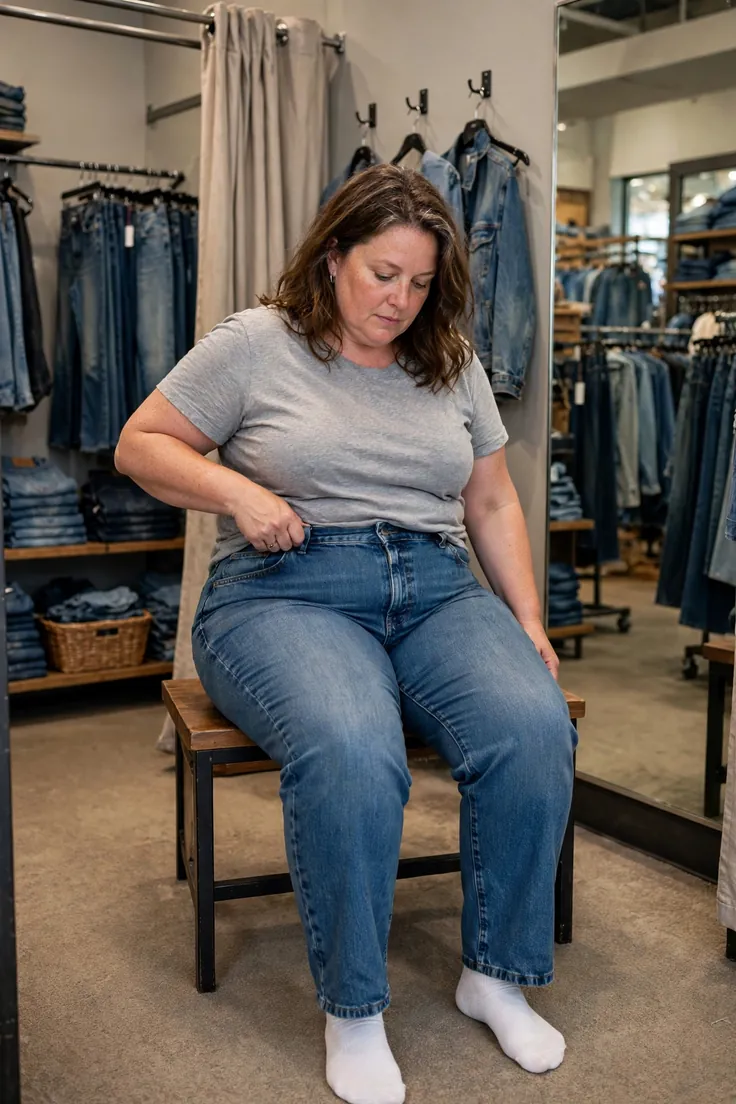
In the fitting room, sit down. The waistband should stay put, not dig, not gap. Stand up and do the two-finger test: you should fit two fingers between the band and your body, no more.
Fit tip: A contoured (curved) waistband fits plus size waists better than a straight one.
Why it matters: Waist gap is the most common plus size jean problem, and it’s a design flaw, not a body flaw.
5. Check the Hip and Thigh Fit
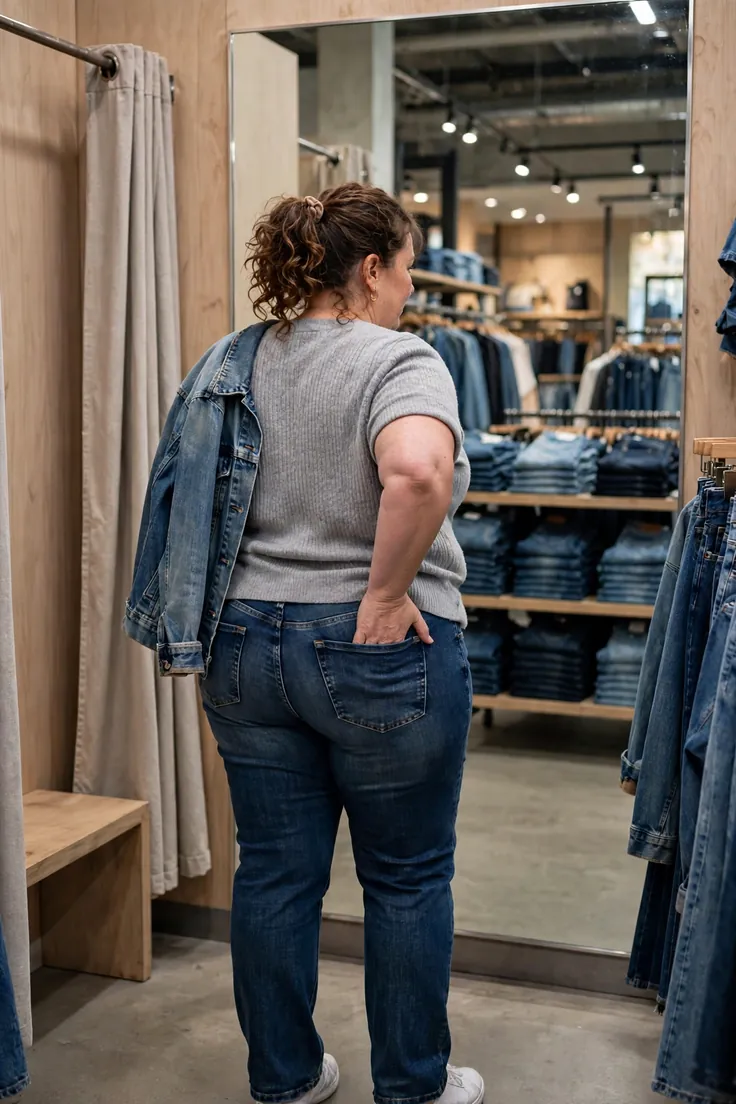
The jeans should skim your hips and thighs without pulling at the pockets. If the pockets flare out or the fly pulls, the hip is too small, size up.
Fit tip: Pockets that lie flat are the visual cue of a good hip fit.
Why it matters: Sizing for your hips and tailoring the waist (or belting) beats squeezing into a too-small hip every time.
6. Get the Inseam Right
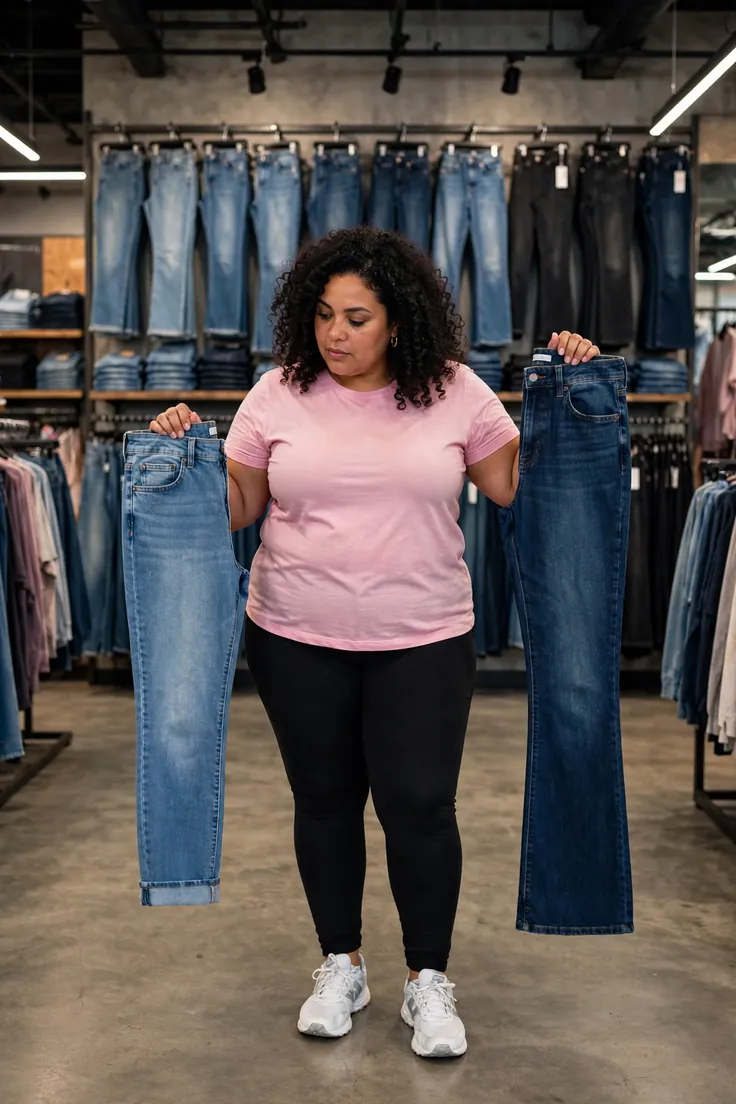
Inseams come in short, regular, and long, and “regular” varies wildly. Measure your best-fitting jeans’ inseam and shop by that number, not by S/M/L.
Fit tip: For heeled boots, you need 1-2 extra inches over your sneaker inseam.
Why it matters: The wrong inseam makes expensive jeans look cheap, bunching or flooding ruins the whole line.
7. Know Your Best Cuts
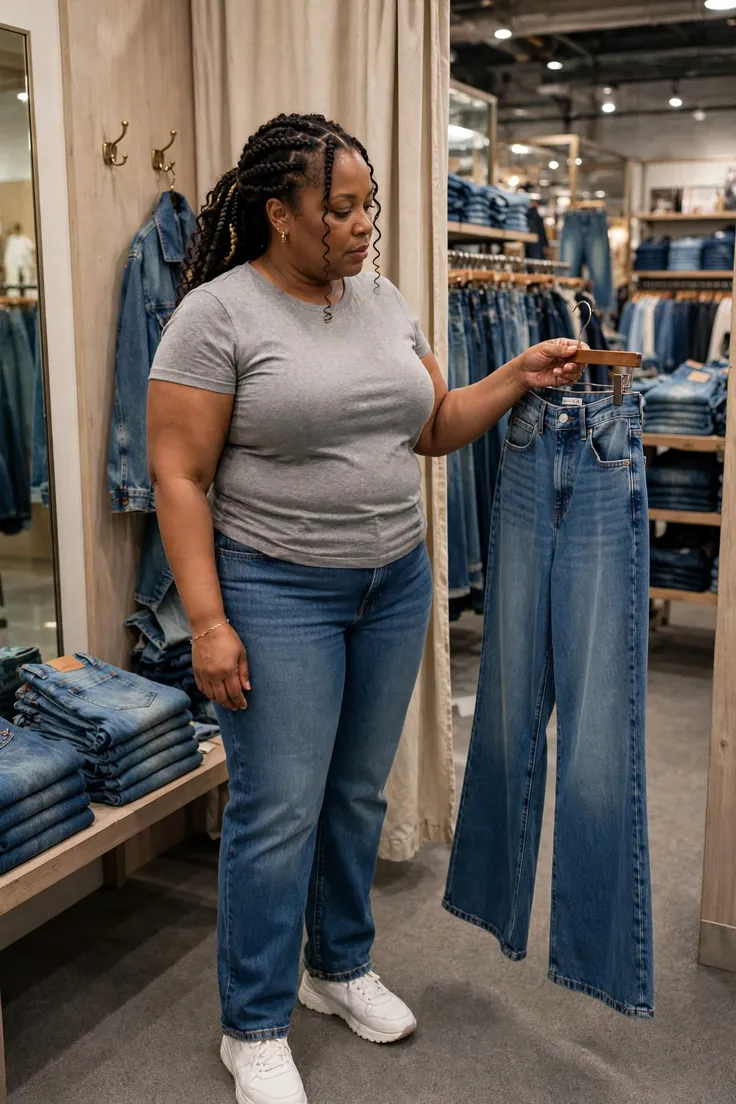
Not every cut works for every body. Straight legs flatter almost everyone; wide-legs balance hips; bootcuts lengthen legs; skinnies need the right rise. Try one of each and photograph yourself, the camera doesn’t lie.
Fit tip: Your “best cut” is the one you reach for, not the trendiest one.
Why it matters: Chasing trends in the wrong cut is why the jeans sit unworn.
8. The Sit-Down Test
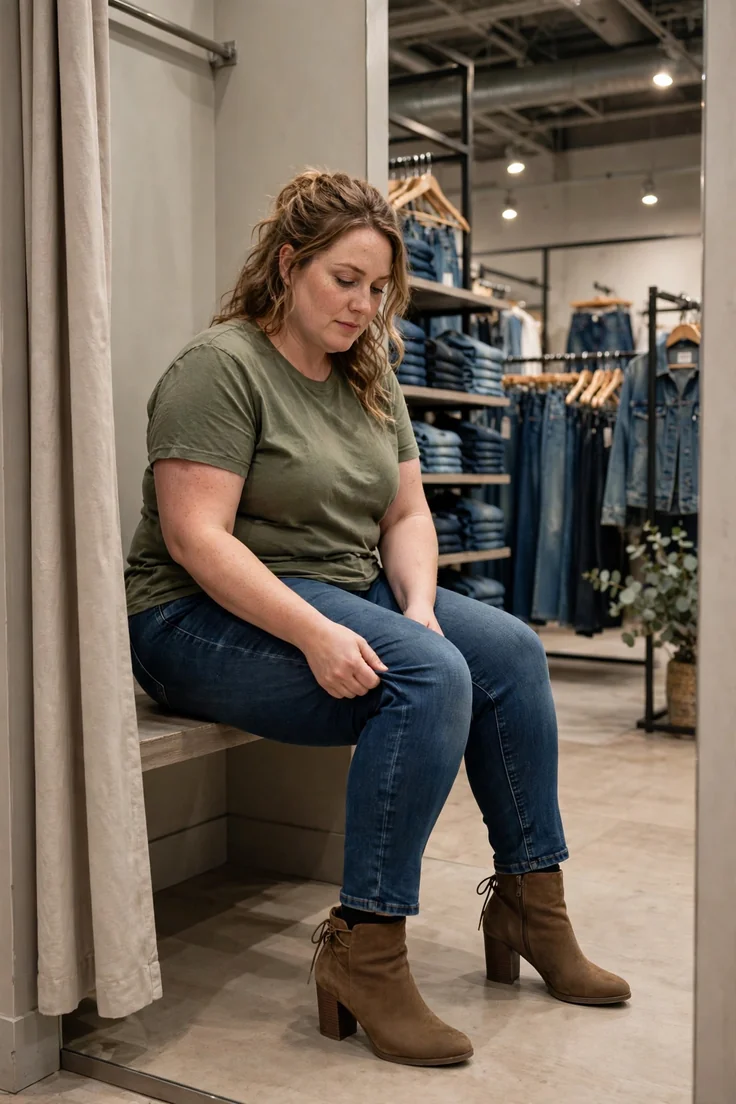
Always sit in the fitting room. Walk, sit, bend. Jeans that feel fine standing can dig, gap, or slide the moment you sit, and you’ll sit in them all day.
Fit tip: Bring the shoes you’ll actually wear, heel height changes everything about the fit.
Why it matters: A 30-second sit test saves you from a pair you’ll never wear.
9. Wash and Care Matter
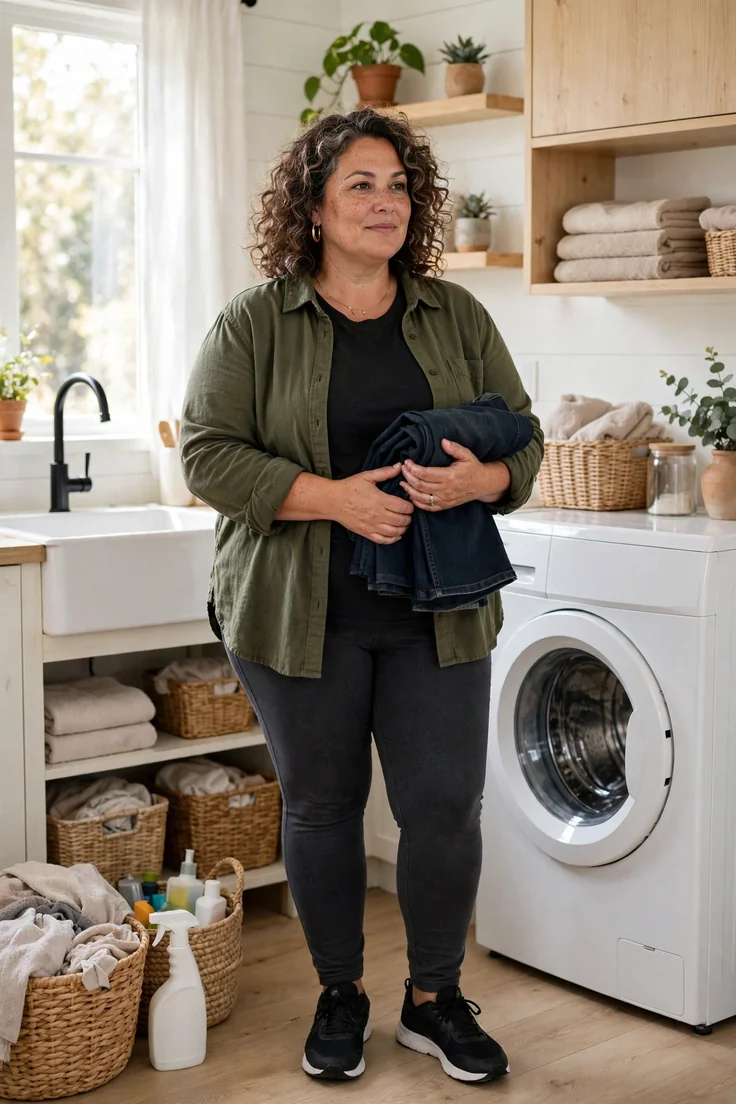
Wash jeans inside out in cold water, and skip the dryer when you can, heat breaks down elastane. Dark jeans stay dark; stretch stays stretchy.
Fit tip: New jeans feel tight for the first hour, denim relaxes about half a size with wear.
Why it matters: The perfect fit on day one is ruined by bad washing by month two.
10. When to Tailor (It’s Cheaper Than You Think)
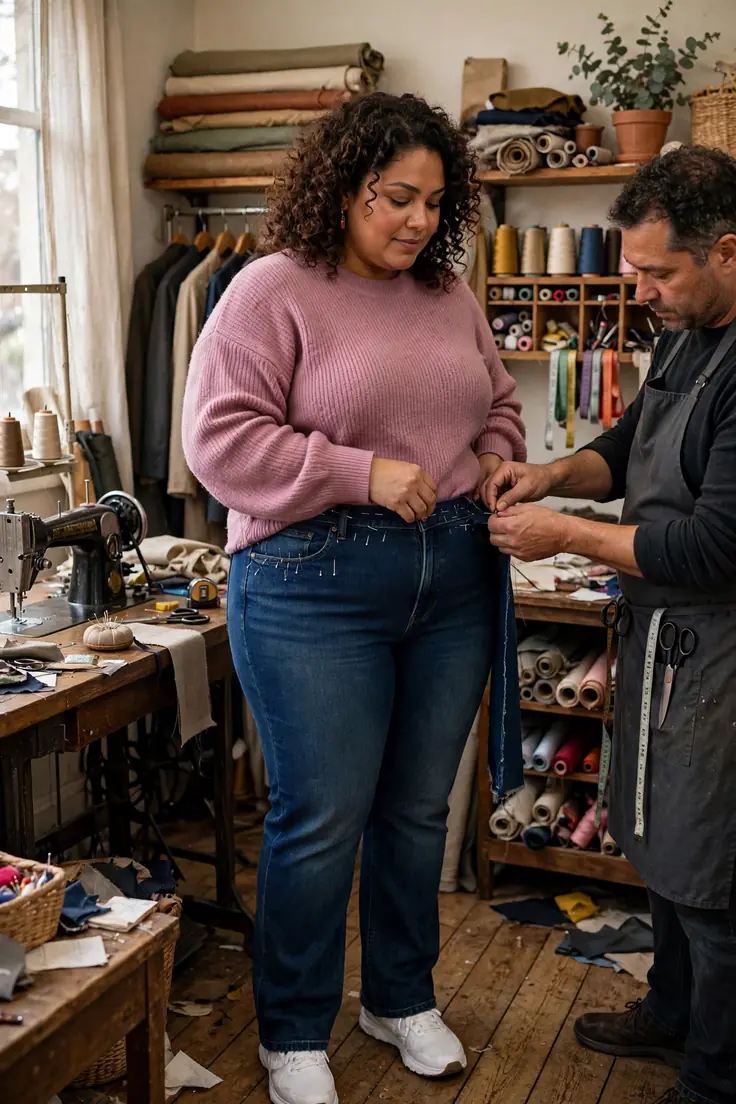
A $15 hem or $20 waistband tuck turns “almost” jeans into perfect jeans. If the hips fit and only the waist or length is off, tailor, don’t keep shopping.
Fit tip: Tailor the waist, not the hips, taking in a waistband is simple; altering hips is not.
Why it matters: One tailored pair beats five “close enough” pairs.
Conclusion
That’s it, measurements, rise, stretch, cut.
Learn those four things once and jeans shopping stops being awful.
Take this guide with you next time.


3 thoughts on “How to Find Jeans That Actually Fit: The Plus Size Fitting Guide”